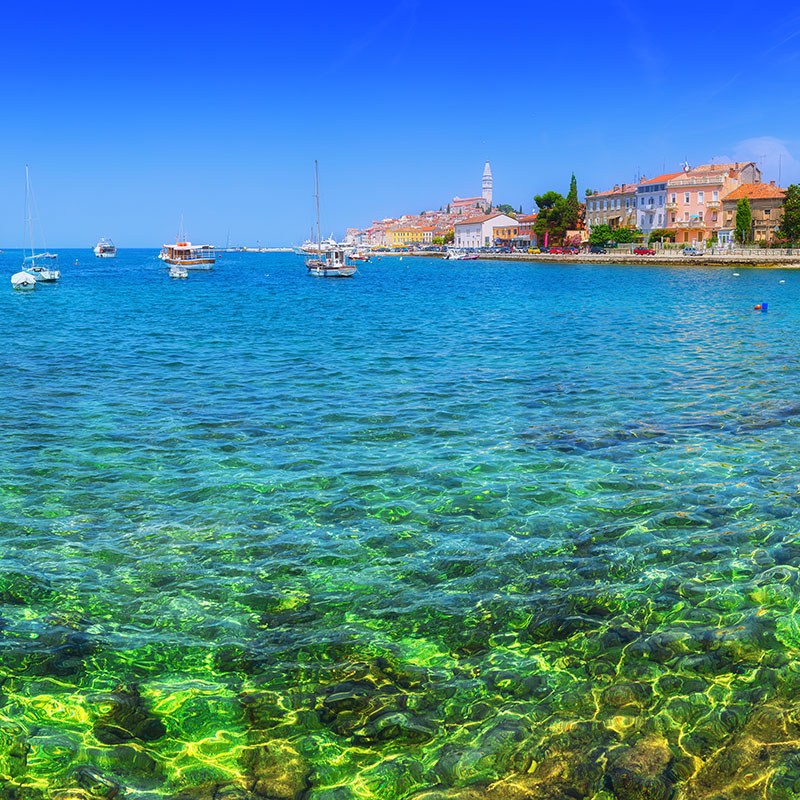
Sights & Attractions Split feels lively and historic, built around a Roman palace. Explore Diocletian’s Palace, where cafés, homes and shops fill the ancient walls. Climb the bell tower of the Cathedral of Saint Domnius for rooftop views, then walk the Riva promenade along the harbour. Marjan Hill also offers shaded paths and a wide view of the islands. Sea & Beach The Dalmatian coast gives
The coast just outside the centre, towards Marjan Hill or the quieter bays east of the port, feels calmer than the old town. The palace area is atmospheric but can stay busy late into the evening. If you want to walk to the sights, stay near the Riva or Veli Varoš. Otherwise, a short taxi ride keeps the peace.
Yes. The old town is pedestrian only, and the Riva, the port and Marjan Hill are all within walking distance. Local buses and taxis cover the beaches and the outskirts. Ferries and catamarans leave from the port for the islands. A car helps only if you want to visit Krka or the coast south of Split, and even then tours are an option.
Kašjuni, below Marjan Hill, is calmer than Bačvice and has pebbles, pine shade and clear water. Smaller coves along the Marjan peninsula are also peaceful early in the day. Bačvice is the lively city beach, popular with locals. For more space, a short ferry to Šolta or Brač offers quieter bays, especially outside the main holiday weeks.
May, June and September combine warm sea, long days and fewer crowds than July and August. The palace and the streets are easier to enjoy when cruise ships are fewer, and the evenings stay mild. July and August are hot and lively, so plan sightseeing early and keep the afternoons for the sea. Winters are mild, but beach life slows down.
Split Airport lies around 20 to 25 kilometres west of the city, near Kaštela. An airport bus runs to the port and the bus station, and taxis are easy to find. The drive normally takes about half an hour. The main bus and ferry terminals sit next to each other, so connections to the islands are simple.
Brač, Šolta, Hvar and Vis are the main options. Brač has Zlatni Rat beach near Bol, while Hvar offers a lively town and quiet lavender hills. Šolta is the closest and calmest, with small harbours and fishing villages. Ferries and fast catamarans run from the port, so check the timetable the day before and arrive a little early.
Grilled fish and seafood are the staples, and black risotto is a local favourite. Peka, meat or octopus slow-cooked under an iron bell, usually needs ordering ahead. Pašticada is a rich beef stew with gnocchi. Try the local olive oil and soft cheeses too. Small konobas away from the Riva often serve the most honest versions.
Yes, all three make easy and rewarding days out. Trogir is a compact walled island town a short drive or bus ride west. Salona holds Roman ruins just north of Split. Krka National Park has waterfalls and walking paths and takes longer, so many couples go on an organised tour. Each trip suits a slow morning start.
Yes, if you choose your hours. Early morning and the late evening are the calmest, because tour groups arrive in the middle of the day. The palace is a living neighbourhood rather than a museum, so you can simply wander the lanes. Visit the cathedral and the cellars first, then relax with a coffee away from the main squares.
For June to September, booking several months ahead is wise, because the best sea view rooms go first. Festivals and the busy ferry season also push demand up in July and August. In May and October you often find more choice closer to your dates. Booking early also helps if you want a quiet room or a specific part of the coast.